Ce cours est sensé fournir les outils mathématiques utilisés dans les sciences technique (mécanique, physique et chimie…Ϳ.
- Enseignant: Dr. BERKANI Amirouche
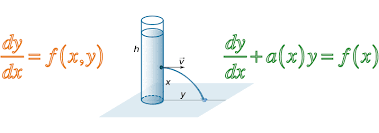
- Enseignant: DR. Mohamed-Ahmed Boudref
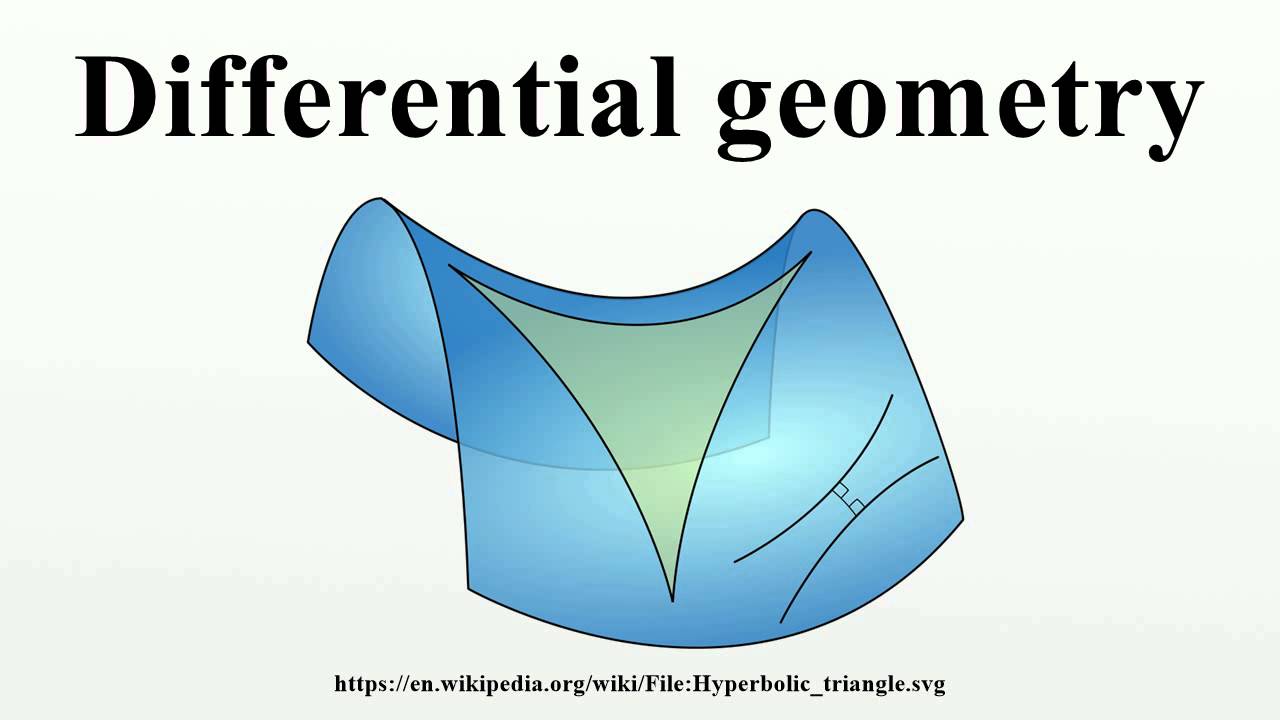
Differential geometry is a branch of mathematics that deals with the geometry of objects that can be described by differentiable functions. It applies to the study of curves, surfaces, manifolds, and abstract spaces. Differential geometry uses mathematical tools such as topology, real analysis, linear algebra, projective geometry, and group theory to study the geometric properties of these objects. Differential geometry has important applications in fields such as robotics, fluid mechanics, cartography, and theoretical physics.
This course will allow the student to:- Learn differential and integral calculus on abstract objects that are differentiable manifolds modeling real Euclidean spaces.
- Understand the basic concepts of differential geometry, such as the differential of a mapping, submanifolds, vector fields, differential forms, etc.
- Study the geometric properties of differentiable manifolds, such as curvatures and connections.
- Apply the tools of differential geometry to problems in physics and engineering, such as general relativity and fluid mechanics.
The learning objectives of this course include:- State the definitions studied in the course.
- State the theorems and propositions studied in the course and prove them.
- Solve the problems given in the exercises.
- Develop skills in differential geometry calculations.
- Give examples of curves and surfaces and know how to parameterize them.
- Enseignant: Hicham Banouh